Chinese Tea Ceremony Guide: Outfit, Hair, Decor, Door Games & Wedding Day Tips
For many Chinese and Asian-American couples in the United States, the Chinese tea ceremony is one of the most meaningful parts of the wedding day. It is a beautiful way to honor parents and elders, receive blessings, and celebrate family traditions before the Western ceremony or reception begins.
However, for many second- or third-generation Chinese couples who grew up in the U.S., the tea ceremony can feel a little confusing at first. You may know that it is important, but you may not know exactly how to prepare the outfits, what props to buy, how the ceremony should flow, or what the family members are supposed to do.
As a wedding photographer who has photographed many Chinese tea ceremonies over the past 10 years, I would love to share some practical tips from a photography and wedding-day timeline perspective. Every family and region may have slightly different traditions, so this guide is not meant to define one “correct” way to do it. Instead, it is a helpful reference for couples who want to include this meaningful tradition in a smooth, beautiful, and stress-free way.
In this guide, I’ll go through outfit ideas, hairstyle suggestions, tea ceremony decor, door games, props, ceremony order, and timeline tips.
- Tea Ceremony Outfits
Outfits are one of the most important parts of the Chinese tea ceremony. They set the tone visually and make the ceremony feel more traditional, festive, and meaningful.
Bridal Outfit Ideas
Most brides choose a traditional Chinese wedding outfit such as a Qun Kwa / Kua, Xiuhe dress, or Qipao / Cheongsam. The most popular colors are usually red, wine red, burgundy, or gold, as these colors feel festive and photograph beautifully.
Some couples purchase their outfits from Chinese shopping platforms such as Taobao or through sellers they find on Xiaohongshu. Others may travel to China, especially cities like Guangzhou, Foshan, Suzhou, or Shanghai, to visit bridal shops in person, try on traditional outfits, and have their garments custom-made.
For couples who are not able to travel to China, there are also local Chinese bridal shops in the U.S. that carry Chinese gowns, as well as online brands that specialize in Chinese wedding attire. For example, some couples choose to order a Qun Kwa, Xiuhe dress, or Qipao from online boutiques that focus on modern Chinese wedding clothing.
Since custom Chinese wedding outfits often take time to produce and ship, I highly recommend starting this process at least 6 months before the wedding, especially if the tea ceremony is an important part of your day.
Helpful Bridal Accessory: A Chinese Fan
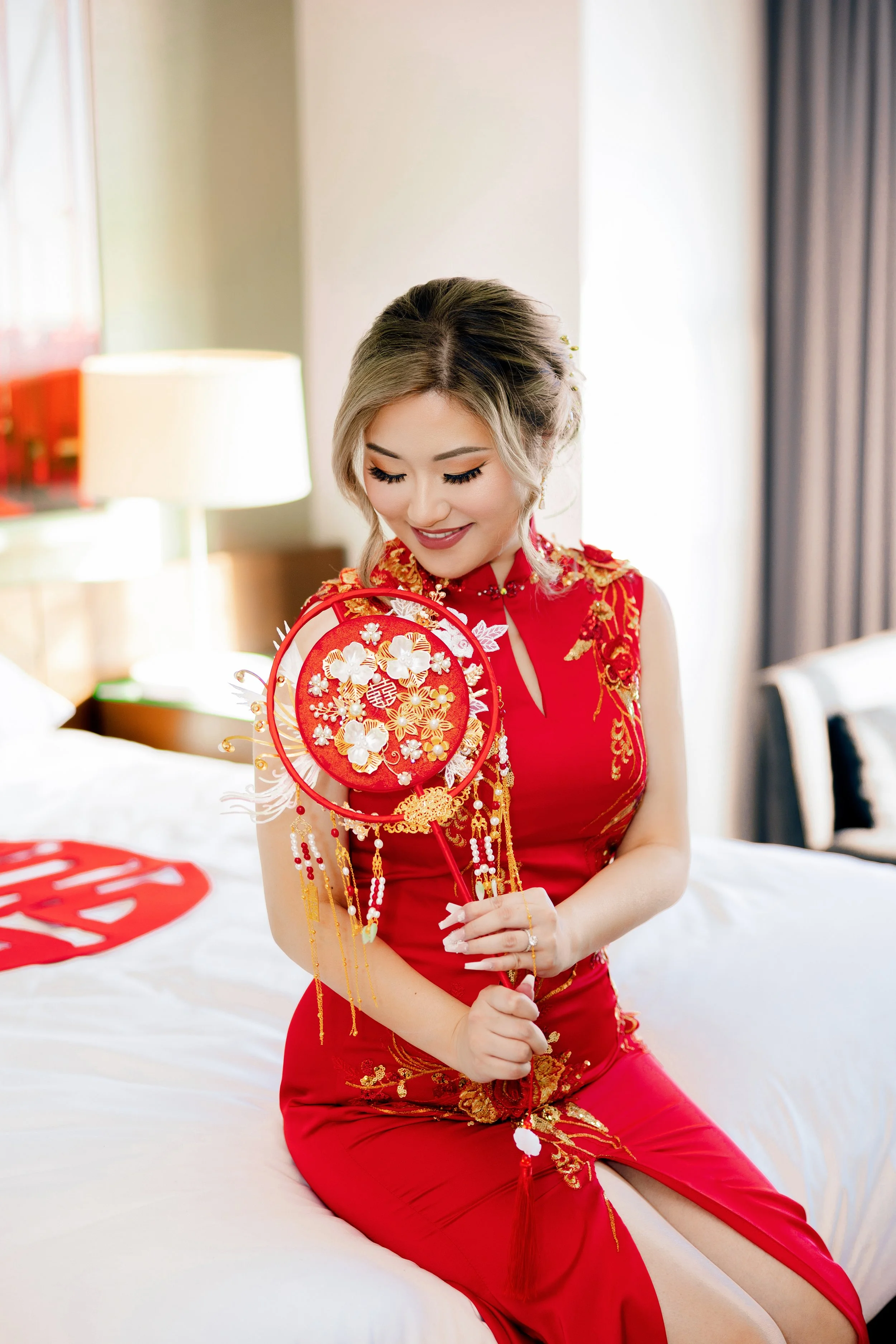
One accessory I highly recommend is a round Chinese fan or embroidered hand fan. Traditional Chinese wedding looks usually do not include a Western bridal bouquet, so a fan can be very helpful for photos.
It gives the bride something elegant to hold, creates more natural posing options, and adds a beautiful cultural detail to the images. It is also especially helpful during solo bridal portraits or couple portraits after the tea ceremony.
- Parents’ Outfits
Parents’ outfits also play an important role in the overall look of the tea ceremony. The goal is to look elegant, respectful, and coordinated with the wedding colors, without competing with the bride and groom.
Mother’s Outfit Ideas
Mothers often choose a Qipao, a Chinese-style dress, or an elegant formal gown with subtle Chinese elements. Popular colors include:
Burgundy or wine red Champagne gold Emerald green Navy blue Mauve or dusty rose Deep rose pink
These colors are festive, mature, and photograph beautifully. I usually recommend avoiding pure white, all black, or overly bright neon colors, as they may feel less harmonious for a traditional tea ceremony setting.
Father’s Outfit Ideas
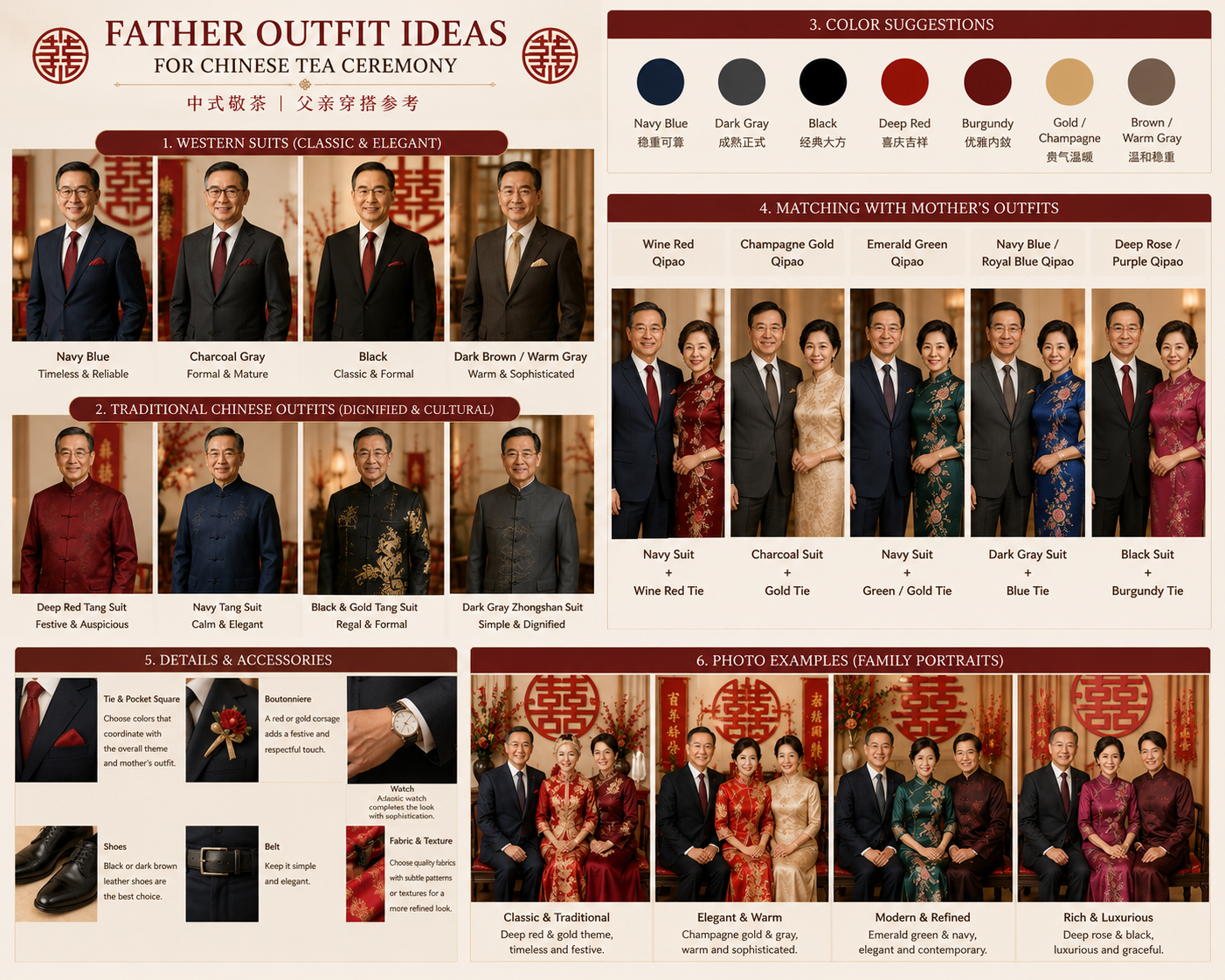
Fathers can wear either a traditional Chinese outfit or a formal Western suit.
Traditional options may include:
Dark red Tang-style jacket with black pants Navy or dark blue Chinese-style jacket Black or dark gray Zhongshan-style suit Black and gold Chinese-style jacket
Western suit options are also very common and timeless. Good suit colors include:
Navy blue Charcoal gray Black Dark brown or warm gray
A nice way to coordinate the parents’ outfits is to match the father’s tie or pocket square with the mother’s dress color. For example, if the mother wears a wine red Qipao, the father can wear a navy or charcoal suit with a burgundy tie.
In many weddings I have photographed, the groom’s parents may choose darker tones such as navy, deep blue, or charcoal, while the bride’s parents may choose wine red, rose, or champagne tones. This is not a strict rule, but it can help create a balanced and harmonious family portrait.
- Hairstyle and Makeup
A traditional Chinese outfit looks much more polished when paired with the right hairstyle and accessories.

For brides wearing a Qun Kwa, Xiuhe dress, or Qipao, a clean and elegant updo is usually the most classic choice. It allows the neckline, embroidery, earrings, and hair accessories to stand out beautifully.
Popular hairstyle ideas include:
Classic low bun Elegant high updo Half-up hairstyle with soft curls Low ponytail with soft waves Vintage wavy curls Modern Chinese-style updo with gold hairpins
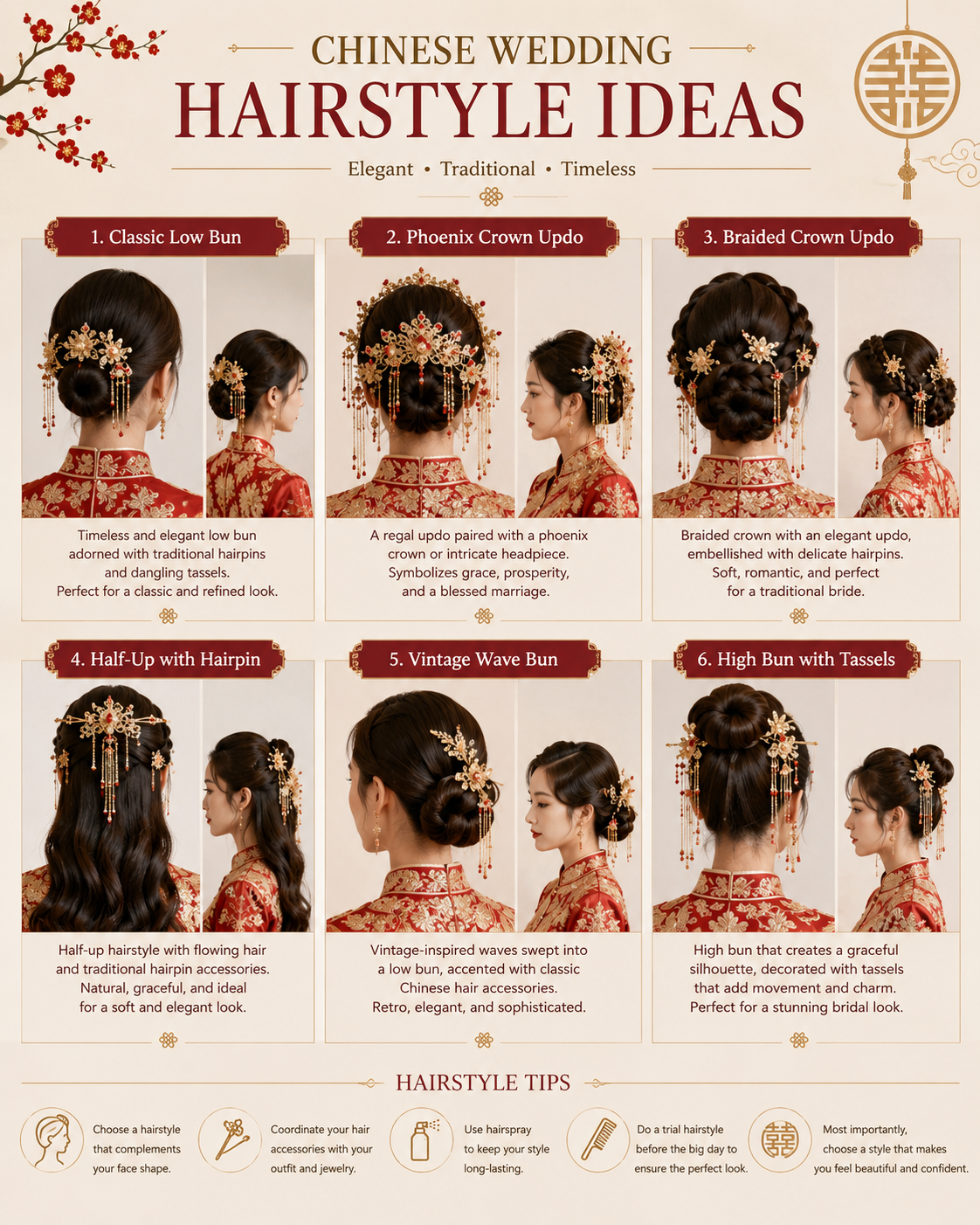
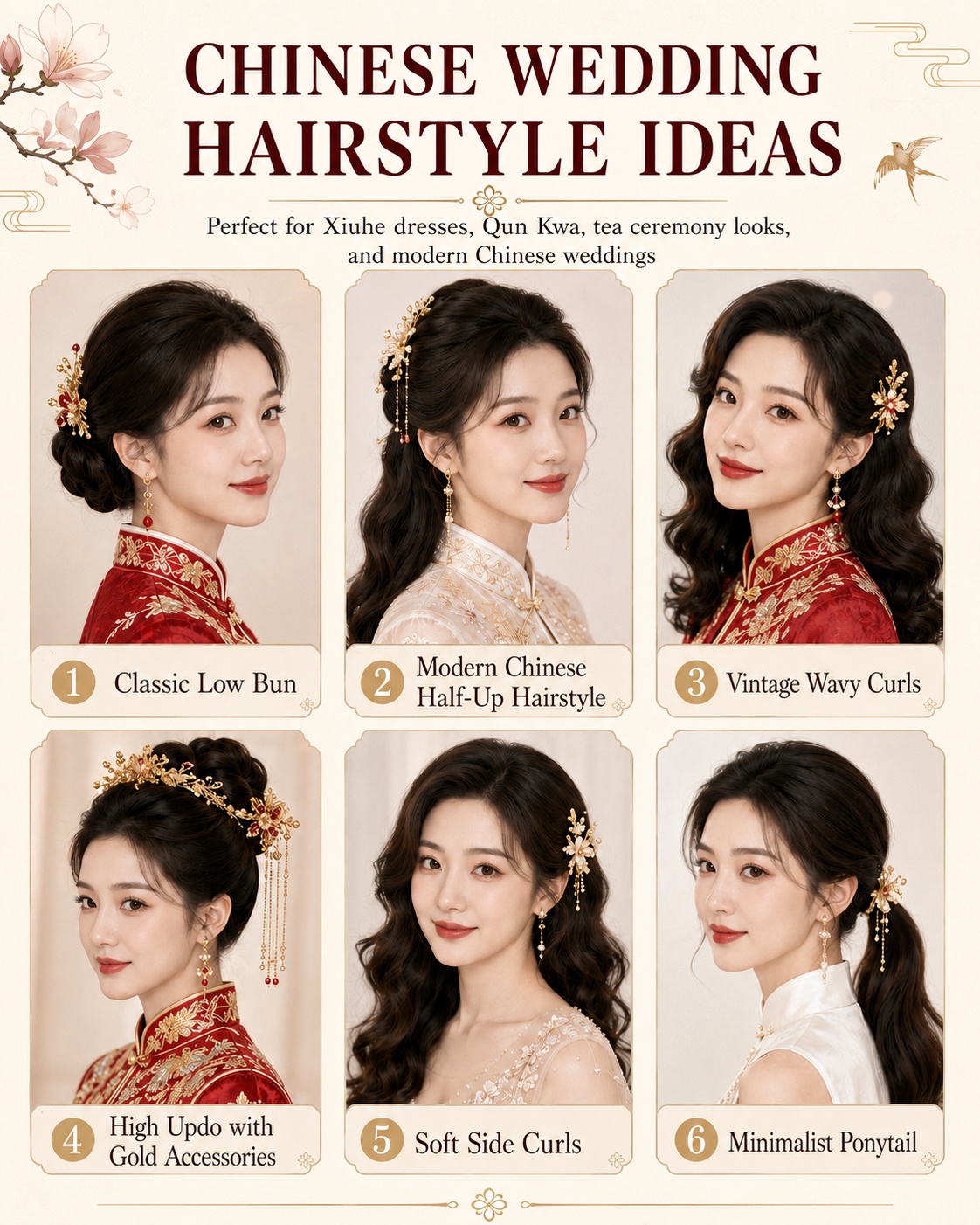
Hair accessories can make a big difference. Many brides choose gold or red hairpins, floral hairpieces, pearl details, or accessories with dragon and phoenix elements. These small details help complete the traditional look and photograph beautifully in close-up portraits.
If your tea ceremony happens early in the morning, make sure to schedule hair and makeup early enough. It is also helpful to ask your hairstylist in advance whether they have experience styling traditional Chinese bridal looks and securing heavier hair accessories.
- Tea Ceremony Decor and Setup
The tea ceremony setting does not need to be extremely elaborate, but thoughtful decor can make the space feel much more meaningful and photogenic.
Basic Tea Ceremony Setup
A simple tea ceremony setup usually includes:
A Double Happiness decoration on the wall Two chairs for the parents or elders Two kneeling cushions for the couple A tea set with teapot and tea cups Tea leaves or prepared tea Red envelopes or jewelry gifts A small side table for tea, gifts, and props
The most popular colors are red, burgundy, gold, and champagne. These colors create a festive and traditional atmosphere.
Double Happiness Decoration
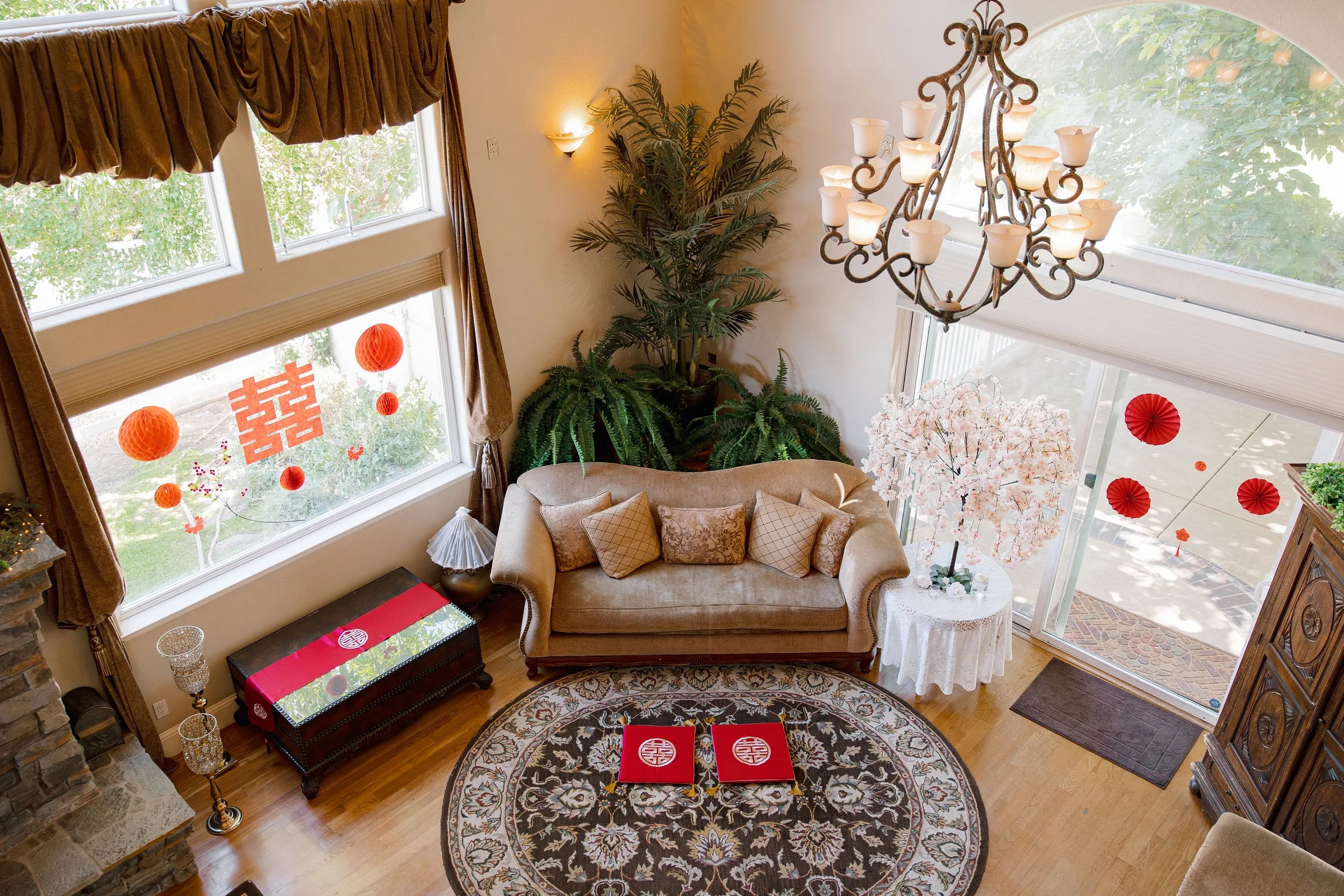
Many couples use a large Double Happiness symbol as the center of the tea ceremony backdrop. If you are using a paper or vinyl decoration, make sure it is placed straight and centered.
One small detail to watch out for: some Double Happiness designs have a correct direction, especially if the strokes are designed with calligraphy style. It is worth double-checking before sticking it on the wall, so it is not accidentally placed upside down or reversed.
Floral and Decor Ideas
To make the setup more elevated, you can add:
Red or burgundy floral arrangements Lanterns Candles or warm lamps Gold trays Embroidered table runners Red cushions with Double Happiness details Fresh fruit or traditional sweets
If the ceremony takes place in a hotel room, I recommend choosing the cleanest and brightest area of the room for the setup. Avoid placing the chairs directly in front of clutter, luggage, mirrors, or busy backgrounds.
From a photography perspective, natural light is always helpful. If possible, set up the tea ceremony near a window, but avoid very harsh direct sunlight.
- Tea Set, Tea, and Ceremony Props
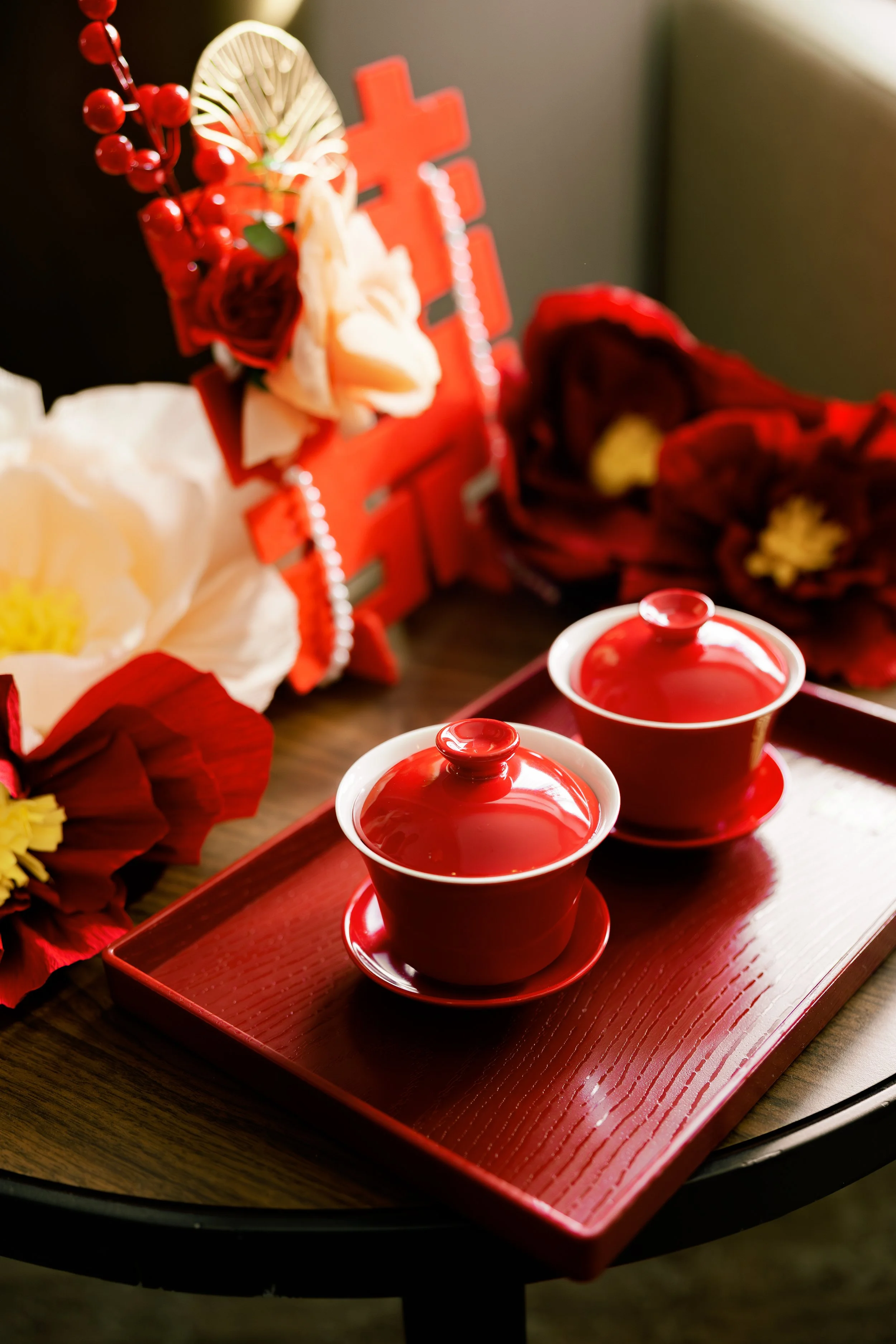
The tea set is a small detail, but it appears in many important photos. A red, burgundy, gold, or traditional porcelain tea set will look more cohesive with the ceremony decor.
You may also want to prepare:
Tea cups and teapot Tea tray Red envelopes Jewelry boxes Gold jewelry or family gifts Kneeling cushions Tissue box nearby A small table for organizing gifts A list of family members in ceremony order
It is best to prepare the tea before the ceremony begins. The tea should be warm, but not too hot, especially because the couple and elders will be holding the cups repeatedly.
Some families prepare tea with red dates, lotus seeds, or other symbolic ingredients. Others simply use Chinese tea. Either option is fine, depending on family preference.
- Door Games
Just like a Western wedding may have a first look, many Chinese weddings include a fun “first meeting” moment between the groom and bride through door games.
Door games usually happen before the tea ceremony. The groom and groomsmen arrive at the bride’s getting-ready location, such as a hotel room or family home. The bride stays inside the room while the bridesmaids create playful challenges for the groom and groomsmen before allowing them to enter.
These games can include questions about the bride, teamwork challenges, funny tasks, or small performances. The idea is to create laughter, excitement, and a joyful atmosphere before the groom finally sees the bride.
Door Game Tips
I recommend keeping the games fun but not too complicated. Around 3 to 5 games is usually enough. A good door game timeline is usually 30 to 60 minutes. If the games are too long, they can easily delay the rest of the wedding day schedule.
A few examples of common door games include:
Asking the groom questions about the bride Making the groom read a love declaration Having the groomsmen complete a teamwork challenge Asking the groom to sing or dance Hiding one of the bride’s shoes for the groom to find
One important reminder: prepare enough red envelopes for the bridesmaids. This is part of the fun and often helps the groom “pass” the challenges more smoothly.
After the groom completes the games, he enters the room, sees the bride, and sometimes searches for the missing bridal shoe. Once he finds the shoe, he helps the bride put it on. This moment is always very sweet and meaningful for photos.
- Tea Ceremony Order
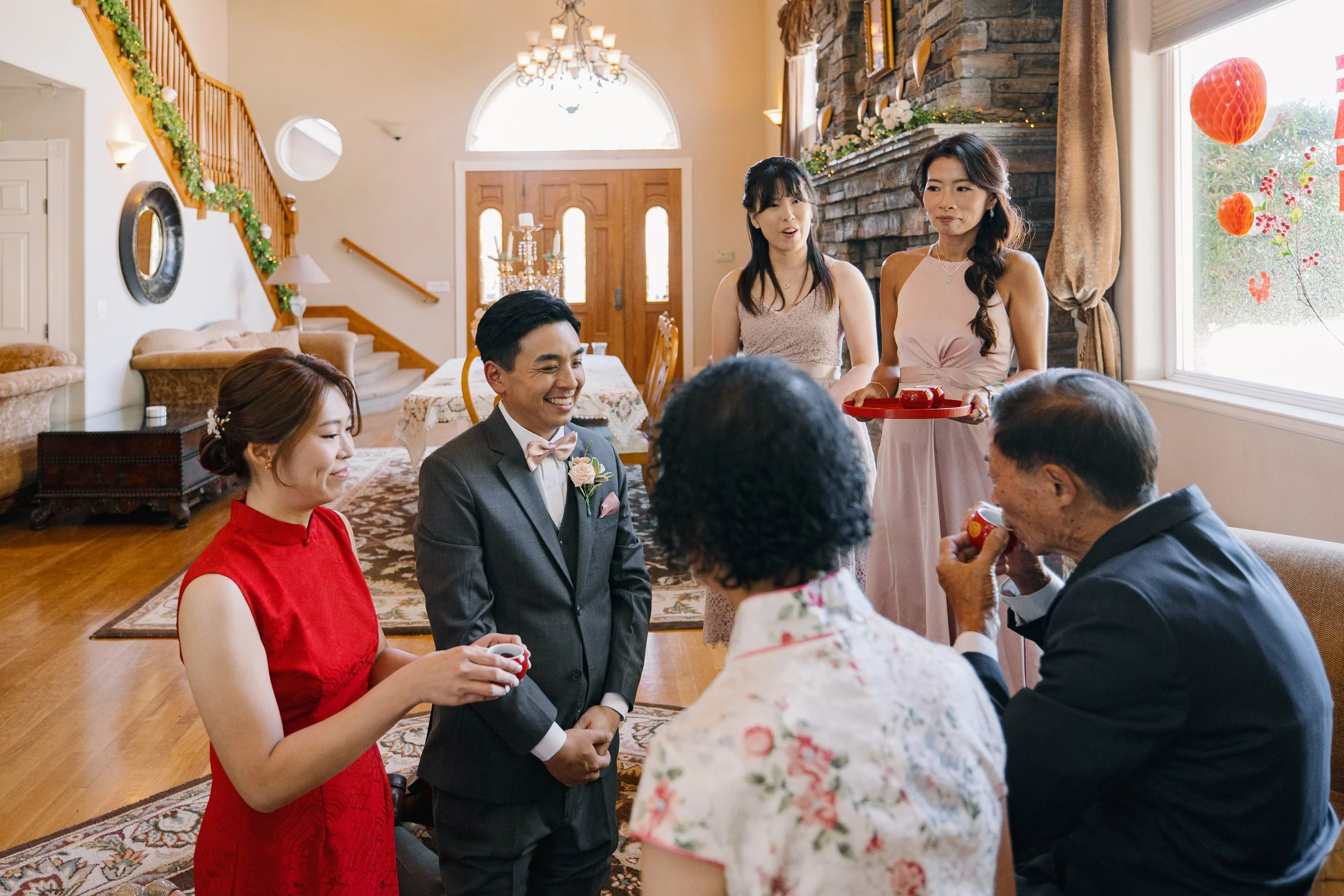
After door games, the tea ceremony usually begins.
If the tea ceremony takes place in one shared location, the couple often serves tea to the bride’s parents first, followed by the groom’s parents. After both sets of parents, they may continue serving tea to grandparents, elder relatives, uncles, aunties, or other respected family members.
However, the order can vary depending on family tradition, regional customs, and which side is hosting the ceremony. Some families serve the groom’s parents first. Some families have separate tea ceremonies at each family’s home.
For example, the couple may first go to the bride’s family home to serve tea to the bride’s parents and relatives. After that, they may travel to the groom’s family home to serve tea to the groom’s parents and relatives.
In some traditions, when the bride leaves her family home, a family member may hold a red umbrella over the couple as they walk to the wedding car. When they arrive at the groom’s home, the umbrella may be used again as the couple enters the house. This tradition may vary by family, so it is always best to check with parents or elders in advance.
- How the Tea Ceremony Works
During the tea ceremony, the elders usually sit in chairs while the couple kneels on cushions or bows slightly, depending on family preference.
The couple serves tea to the elders one by one. A common way to say it is:
“爸爸,请喝茶。” “妈妈,请喝茶。” “Grandma, please drink tea.” “Uncle, please drink tea.”
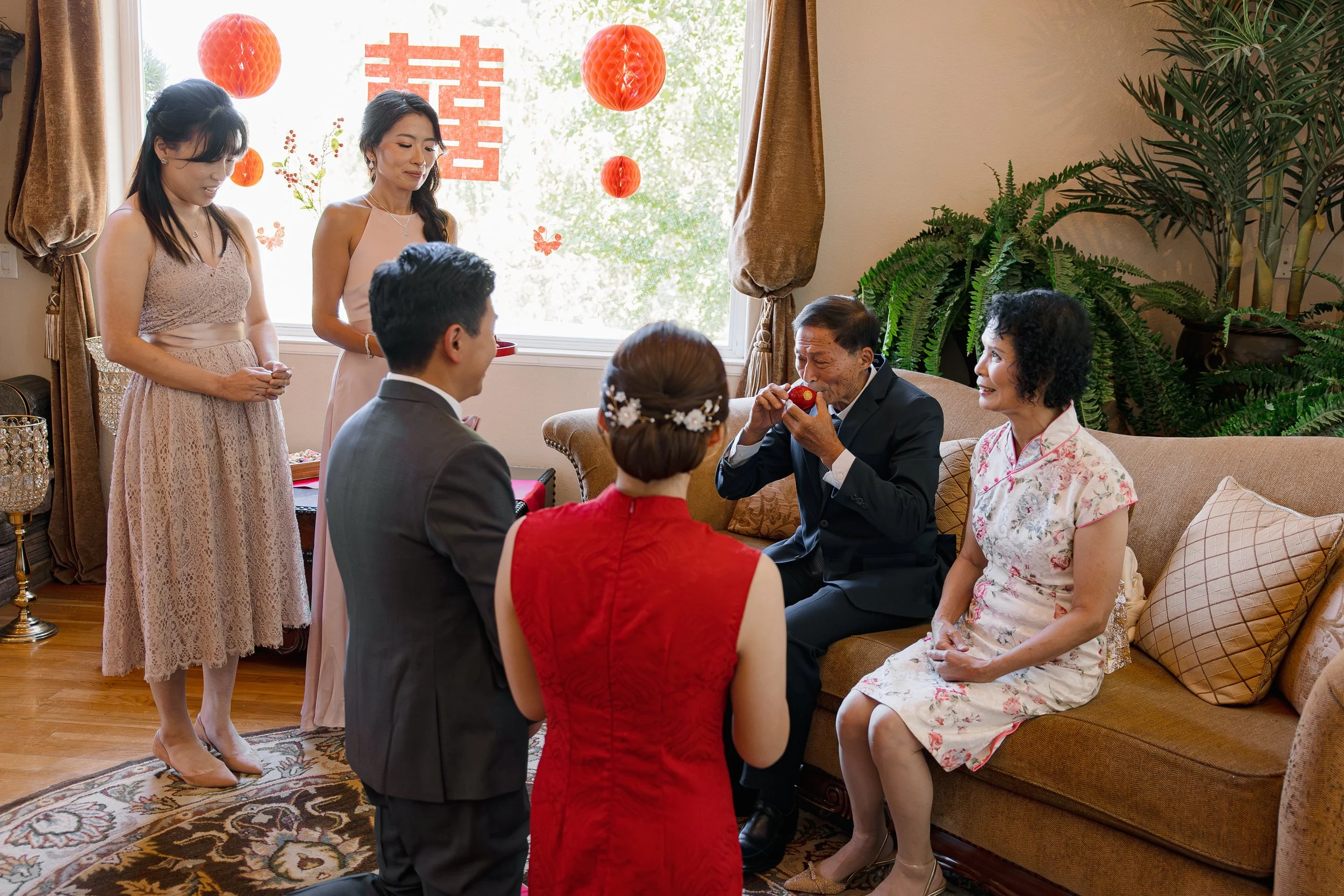
The elders then drink the tea and give their blessings. They may also give red envelopes, gold jewelry, family heirlooms, or other meaningful gifts. In many weddings, parents will place jewelry directly on the bride, such as gold bracelets, necklaces, or earrings. These moments are very meaningful and beautiful to photograph.
Usually, both the bride and groom will serve tea to each elder. For example, the groom may serve tea to the bride’s father and mother, and then the bride may also serve tea to them. The same flow continues for the groom’s parents and other elders.
To make the ceremony smoother, I recommend assigning one or two helpers. One person can help refill and pass tea cups, while another person can announce the order and say blessings. This keeps the ceremony organized and helps everyone know what is happening.
Having someone say joyful blessings also makes the ceremony feel more lively. If everyone is too quiet, the photos may feel less emotional and less festive. Simple phrases like “祝你们百年好合,” “早生贵子,” “永结同心,” or “幸福美满” can bring more warmth and laughter into the room.
- Family Photos After the Tea Ceremony
After the tea ceremony, it is very common to take family portraits with each group of relatives.
I recommend preparing a short family photo list in advance, especially if there are many relatives involved. This helps the photographer and planner move quickly and avoid missing important combinations.
Common photo groupings include:
Couple with bride’s parents Couple with groom’s parents Couple with both sets of parents Couple with grandparents Couple with each side of the family Couple with siblings Couple with aunties, uncles, and cousins
If there is an ancestor worship or incense ceremony before the tea ceremony, it is helpful to let your photographer know in advance so they can prepare for that moment as well.
- Timeline Tips From a Photographer’s Perspective
Tea ceremonies are meaningful, but they can take longer than expected. A smooth timeline is very important, especially if the wedding day also includes a Western ceremony, first look, portraits, travel time, and reception.
Here are a few helpful timeline tips:
Prepare everything the night before
Outfits, jewelry, tea set, red envelopes, kneeling cushions, fans, and decor should be ready before the wedding morning. The wedding morning is usually busy, and small missing items can create stress.
Keep the room clean
Hotel rooms can get messy very quickly during hair, makeup, and getting ready. Before the tea ceremony begins, ask bridesmaids or family members to move luggage, water bottles, shopping bags, and random items away from the ceremony area.
Assign a family coordinator
Choose one person from each family who knows the relatives and can help call people when it is their turn. This is especially important for large families.
Do not overpack the schedule
If you are including door games, tea ceremony, family photos, and travel, make sure there is enough buffer time. Door games are fun, but they should not make the entire wedding day feel rushed.
Tell your photographer the family order
The more your photographer understands the ceremony flow, the easier it is to capture the important moments naturally and respectfully.
Final Thoughts
A Chinese tea ceremony is more than just a tradition. It is a heartfelt moment for parents, grandparents, and family members to bless the couple as they begin their marriage.
Whether your tea ceremony is very traditional or more modern and simple, the most important thing is to make it meaningful for your family. With thoughtful preparation, beautiful outfits, a clean setup, and a smooth timeline, this part of the wedding day can become one of the most emotional and memorable moments.
Every family has its own traditions, and there is no single “perfect” way to do a tea ceremony. My best advice is to communicate with both families early, decide what traditions matter most to you, and prepare the details in advance so you can fully enjoy the moment on the wedding day.
中式敬茶仪式准备指南:服装、发型、布置、Door Game 与流程 Tips
对于很多在美国办婚礼的华人新人来说,中式敬茶仪式是婚礼当天非常重要、也非常有意义的环节。它不仅是一个传统仪式,更是新人向父母与长辈表达感谢、接受祝福、正式进入婚姻的一刻。
不过,对于很多在美国长大的第二代、第三代华人新人来说,大家可能知道 Tea Ceremony 很重要,却不一定清楚具体要怎么准备:新娘应该穿什么?父母要穿什么?敬茶区怎么布置?Door Game 怎么安排?敬茶顺序应该怎么走?需要准备哪些道具?
作为一位在过去 10 年拍摄过许多中式敬茶仪式的婚礼摄影师,我想从摄影和婚礼当天流程的角度,分享一些实用的准备建议。每个家庭、地区和文化背景的习俗都会有些不同,所以这篇文章并不是要定义“唯一正确”的做法,而是希望帮助新人更轻松、有条理地准备一个温馨、顺畅又好看的敬茶仪式。
1. 中式敬茶仪式的服装准备
服装可以说是整个敬茶仪式里最重要的视觉元素之一。合适的中式服装不仅会让仪式更有传统感,也会让照片更完整、更有氛围。
新娘服装:龙凤褂、秀禾服、旗袍
大部分新娘会选择传统中式婚礼服装,例如:
龙凤褂 / Qun Kwa
秀禾服 / Xiuhe Dress
旗袍 / Qipao or Cheongsam
颜色通常以红色、酒红色、金色、香槟色为主。红色和金色在中式婚礼里代表喜庆、祝福和好运,也非常适合拍照。
不少华人新人会选择在中国的购物网站,例如淘宝、小红书,联系卖家购买或定制中式礼服。也有一些新人会特地飞去中国,比如广州、佛山、苏州、上海等地,到实体店试穿、量身定制,再等待制作完成后寄回美国,或者请亲友帮忙带回。
如果新人没有时间去中国,或者不方便跨国定制,也可以选择美国本地华人经营的婚纱店,或一些专门做中式婚礼服装的线上品牌,购买龙凤褂、秀禾服或旗袍。
因为中式礼服通常需要定制、修改和运输时间,如果你已经确定 Tea Ceremony 是婚礼当天必备的环节,我会建议至少提前 6 个月开始准备服装,这样会比较安心,也有时间处理尺寸修改或运输延误的问题。
新娘道具:团扇很推荐
新娘还可以准备一把中式团扇,作为拍摄道具。
传统中式造型通常不像西式婚礼那样搭配手捧花,所以团扇会非常实用。它可以让新娘在拍照时手上有东西可以拿,避免姿势尴尬,也可以增加画面的中式氛围感。
无论是单人肖像、夫妻合照,还是敬茶前后的仪式照片,团扇都会让画面更优雅、更完整。
2. 父母的服装建议
父母的穿着也会影响整个敬茶仪式的视觉效果。建议父母选择端庄、正式、喜庆,但不要过于抢眼的服装。
母亲穿什么?
母亲通常可以选择旗袍、改良旗袍,或者比较端庄优雅的中式晚宴服。
比较推荐的颜色包括:
酒红色
香槟金色
墨绿色
深蓝色
肉粉色 / 豆沙粉
紫红色 / 暗玫红色
这些颜色既有喜庆感,又不会太夸张,拍照也很有质感。
如果新娘当天穿的是正红色龙凤褂或秀禾服,母亲可以避免穿太亮的大红色,以免和新娘撞色。酒红、香槟金、墨绿、深蓝都会更稳重,也更适合长辈。
父亲穿什么?
父亲可以选择传统中式服装,也可以选择正式西装。
中式选择包括:
中山装
唐装外套
酒红色中式上衣 + 黑色裤子
深蓝色中式上衣 + 黑色裤子
黑色或深灰色中式套装
如果选择西装,比较推荐:
深蓝色西装
深灰色西装
黑色西装
深棕色或暖灰色西装
父亲的领带或口袋巾可以和母亲的服装颜色呼应。比如母亲穿酒红色旗袍,父亲可以搭配酒红色领带;母亲穿香槟金色旗袍,父亲可以搭配金色或香槟色领带。
有些婚礼中,新郎父母会选择深蓝色、深灰色系,看起来更稳重;新娘父母可能会选择酒红色、粉色或香槟色系,看起来更喜庆温柔。不过这不是固定规则,最重要的是两边父母整体颜色协调、风格统一。
3. 中式婚礼发型建议
传统中式服装搭配对应的发型非常重要。发型、服装和饰品如果统一,整体造型会更精致,也更有高级感。
对于龙凤褂、秀禾服或旗袍来说,最受欢迎的发型通常是干净、优雅的盘发。盘发可以更好地展示领口、刺绣、耳环和发饰,也会让整体造型看起来更端庄。
常见的中式婚礼发型包括:
经典低盘发
高盘发配金饰
新中式半扎发
复古波浪卷发
温柔侧边卷发
简约低马尾或低发髻
如果新娘想要更传统的感觉,可以选择低盘发或高盘发,并搭配金色发叉、红色流苏、珍珠或龙凤元素发饰。
如果新娘喜欢更轻盈、现代的新中式感觉,半扎卷发、低马尾或侧边卷发也是很好的选择。它们会更加温柔自然,也更适合希望保留一点现代婚礼感的新人。
建议新娘提前和化妆师确认:是否有中式婚礼造型经验,是否会固定比较重的中式发饰,以及发型是否可以维持一整天。
4. 敬茶区布置建议
为了让敬茶仪式更有氛围,环境布置也很重要。布置不一定要非常复杂,但需要干净、对称、有仪式感。
基础敬茶布置需要准备什么?
一般来说,一个简单完整的敬茶区可以包括:
双喜字背景
两张椅子给长辈坐
两个跪垫给新人使用
茶壶和茶杯
托盘
茶叶或提前准备好的茶
红包或金器礼物
小桌子放茶具和礼物
如果空间允许,可以在两侧加入红色或酒红色插花、灯笼、屏风、蜡烛、金色装饰等,让整体更有中式氛围。
双喜字要注意方向
很多新人会购买“双喜”贴纸或背景布贴在墙上。这里有一个小细节要注意:有些双喜字设计因为书法结构或图案方向的关系,可能会有正反区别。贴之前最好确认一下,不要贴反或贴歪。
颜色搭配
中式敬茶最常见、也最不容易出错的配色是:
红色 + 金色
酒红色 + 香槟金
红色 + 深木色
红色 + 墨绿色点缀
这些颜色既喜庆,又比较耐看。如果想让画面更高级,可以避免使用太荧光、太塑料感的红色,选择酒红、深红、暗红,会更有质感。
酒店房间布置 Tips
如果敬茶仪式在酒店房间进行,建议提前选择一个背景最干净、光线最好的区域。
尽量避免背景里出现行李箱、塑料袋、杂物、水瓶、化妆工具等。敬茶开始前,可以请伴娘或亲友帮忙快速整理一下现场。干净的背景会让照片立刻好看很多。
5. 茶具、茶叶和敬茶道具
茶具虽然是小细节,但会在很多照片里出现,所以尽量选择和整体布置协调的款式。
比较推荐的茶具颜色包括:
红色
酒红色
金色
传统陶瓷花纹
带双喜元素的茶具
敬茶前可以提前准备好:
茶壶
茶杯
托盘
茶叶
红包
金器或首饰盒
跪垫
纸巾
家人敬茶顺序表
茶最好提前泡好,仪式开始前倒入茶杯。温度建议保持温热即可,不要太烫,因为新人和长辈都需要反复端杯、接杯,太烫会不方便,也可能影响仪式节奏。
有些家庭会在茶里加入红枣、莲子等寓意美好的食材;也有家庭会直接使用中国茶。这个可以根据家里长辈的习惯来决定。
6. Door Game / 接亲游戏
就像西式婚礼可能有 First Look 一样,中式婚礼也有一个新郎第一次见到新娘的环节,而且通常更热闹、更有趣,就是 Door Game,也可以理解为接亲游戏或堵门游戏。
Door Game 通常发生在敬茶仪式之前。新郎会带着伴郎们来到新娘 Getting Ready 的地方,比如酒店房间或家里。新娘会在房间里等待,伴娘们则在门口设置一些游戏和挑战,新郎和伴郎们需要完成任务,才能顺利进入房间见到新娘。
Door Game 可以玩什么?
常见的 Door Game 包括:
问新郎关于新娘的问题
让新郎读爱的宣言
让伴郎团完成团队挑战
唱歌或跳舞
做一些轻松有趣的小游戏
找新娘的鞋子
有些家庭会设置两道门:第一道门是伴娘团游戏,第二道门是新娘房间门口的小挑战。等新郎完成所有游戏之后,才可以进入房间见到新娘。
如果有藏鞋环节,新郎通常需要找到新娘的另一只鞋,然后帮新娘穿上鞋子。这个画面非常有趣,也很适合拍照。
Door Game 时间建议
Door Game 建议控制在 30–60 分钟 内。游戏不需要设置得太复杂,通常 3–5 个游戏 就足够了。
如果游戏太多或太难,很容易影响后面的 Tea Ceremony、Family Photos、First Look 或婚礼正式流程。婚礼当天时间通常比想象中紧张,所以 Door Game 最重要的是热闹、开心,而不是拖太久。
红包记得准备
一个重要提醒:记得提前准备足够的红包给伴娘们。
这不仅是传统习俗的一部分,也会让整个 Door Game 更有气氛。红包金额不一定要很大,但数量要准备充足,避免当天临时找不到。
7. 敬茶仪式流程与顺序
Door Game 结束后,通常就会进入敬茶仪式。
如果敬茶仪式在同一个地点进行,常见的顺序是:
先向新娘父母敬茶
再向新郎父母敬茶
之后再向爷爷奶奶、外公外婆、叔叔阿姨等长辈敬茶
不过,这个顺序并不是绝对的。不同家庭、地区和传统可能会有不同安排。有些家庭会先敬男方父母;有些家庭会根据“在哪边家里举行”或“哪边主办”来决定顺序。
有时候,新人会先去新娘家完成女方家的敬茶,然后再一起前往新郎家,完成男方家的敬茶。
在一些传统里,当新人离开女方家时,会有一位亲戚撑着红色雨伞,送新人走出家门,直到进入婚车。到达男方家之后,也可能会再撑伞送新人进入家门。这个习俗是否保留,可以根据双方家庭的传统和长辈意见决定。
8. 敬茶仪式怎么进行?
敬茶时,长辈通常坐在椅子上,新人跪在跪垫上,或者以半弯腰的方式敬茶。是否跪拜,取决于家庭传统和新人自己的舒适度。
新人会一位一位向长辈敬茶。常见说法可以是:
“爸爸,请喝茶。”
“妈妈,请喝茶。”
“爷爷,请喝茶。”
“奶奶,请喝茶。”
长辈喝茶后,通常会说祝福语,并给新人红包、金器、首饰或其他礼物。有些父母会当场为新娘戴上金手镯、项链或其他首饰,这些都是非常有意义、也非常适合拍摄的瞬间。
一般来说,新郎和新娘都会分别向每一位长辈敬茶。比如先由新郎向爸爸敬茶,再向妈妈敬茶;然后新娘也分别向爸爸妈妈敬茶。之后再继续下一组长辈。
建议安排一个人负责端茶
敬茶仪式最好安排一位伴娘、亲戚或阿姨专门负责端茶、递茶、收杯、补茶。这样流程会顺很多,新人也不会手忙脚乱。
建议安排一个人负责念祝福词或 cue 流程
另外,也可以安排一位比较会带气氛的亲友,负责提醒下一位长辈是谁,或者在旁边说一些吉利话。
比如:
“祝你们百年好合。”
“祝你们永结同心。”
“祝你们幸福美满。”
“祝你们甜甜蜜蜜。”
这个环节看似小,但非常重要。如果整个仪式太安静,现场气氛可能会有点冷,照片里的表情也会少一些喜庆感。适当的祝福词和笑声,会让画面更有温度。
9. 敬茶后的家庭合照
敬茶仪式结束后,通常会和每一组长辈拍合照。
建议新人提前准备一份简单的 Family Photo List,这样摄影师和家人都能清楚知道要拍哪些组合,也可以避免遗漏重要亲友。
常见的合照组合包括:
新人 + 新娘父母
新人 + 新郎父母
新人 + 双方父母
新人 + 爷爷奶奶 / 外公外婆
新人 + 女方家人
新人 + 男方家人
新人 + 兄弟姐妹
新人 + 叔叔阿姨、表兄弟姐妹
如果家里有烧香、拜祖先或祭祖的环节,也建议提前告诉摄影师,这样摄影师可以提前准备好拍摄角度和光线。
10. 摄影师角度的时间安排建议
敬茶仪式很有意义,但也很容易比预期花更多时间。尤其是如果婚礼当天还包括 Door Game、Getting Ready、First Look、西式仪式、外景拍摄和晚宴,时间安排就非常重要。
所有道具前一晚准备好
服装、发饰、首饰、茶具、跪垫、红包、团扇、双喜贴纸、装饰品,最好在婚礼前一晚全部准备好。
婚礼当天早上通常非常忙,如果临时找东西,很容易造成压力和延误。
敬茶区提前整理干净
敬茶开始前,请家人或伴娘帮忙清理背景。把行李箱、杂物、购物袋、水瓶、化妆品等移出拍摄范围。
一个干净的空间,会让照片看起来更高级。
安排一位家庭协调人
如果亲戚比较多,建议双方家庭各安排一位熟悉亲友的人,负责叫下一位长辈上前敬茶和拍照。
摄影师不一定认识所有亲戚,所以有家庭协调人会大大提高效率。
Door Game 不要安排太久
Door Game 很有趣,但建议不要过度设计。太多游戏会让后面的流程被压缩,新人也容易累。
如果当天时间紧张,宁可减少游戏数量,也不要牺牲敬茶和家庭合照的时间。
提前告诉摄影师流程
如果你的敬茶仪式有特别的顺序、重要长辈、祖先仪式、撑红伞、藏鞋、送礼等环节,请提前告诉摄影师。
摄影师越了解流程,就越能提前站在合适的位置,拍到最重要的瞬间。
结语
中式敬茶仪式不只是一个传统流程,它更像是一个充满爱与感谢的家庭时刻。
新人通过敬茶向父母和长辈表达感恩,长辈通过祝福、红包和礼物,把对新婚生活的期许交给新人。这些画面往往非常真实、温暖,也会成为婚礼当天最有意义的回忆之一。
无论你的 Tea Ceremony 是非常传统,还是更现代、简化,只要提前准备好服装、发型、布置、道具和时间安排,这个环节都可以顺利又美丽地完成。
每个家庭的习俗都会不同,所以没有唯一标准答案。最重要的是提前和双方父母沟通,了解他们最在意的传统,再结合你们自己的婚礼流程,安排一个既尊重家庭、又适合你们的中式敬茶仪式。
#Chineseteaceremonyguide #bayareachineseteaceremony #teaceremonytips #中式敬茶注意事项